
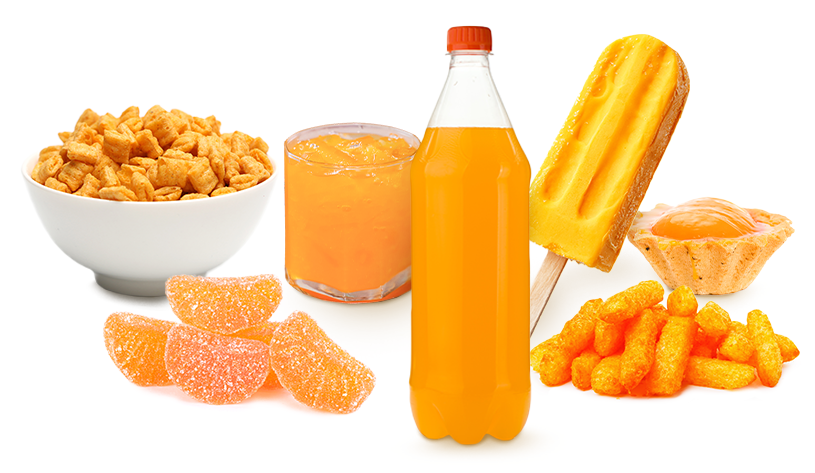
It takes a matter of seconds for individuals to make a decision about whether a product looks attractive or not. Color is often the most attention-grabbing feature of a food before flavor, texture or ingredients. This is why food companies spend so much time considering coloring options, as they are choosing natural orange food coloring for anything that requires warm and vibrant shades. Product teams tend to test color ingredients carefully as appearance may be a factor in determining the consumer’s perception of a product before any purchase is made.
Different Products Behave
The colorant could behave quite differently in each category of food. All types of beverages, bakery products, dairy products and snacks possess different formulation characteristics. Properties with good performance in one product may need to be modified in another. Therefore, it is common practice for manufacturers to perform application-specific testing prior to finalizing their decision. When formulating a new product, the Food Colors Manufacturer can offer technical data that will help the product developer to understand what may happen to the product. Testing will continue to be an important component of ingredient selection for product needs.
Manufacturing Creates Variables
There are numerous factors involved in the production of food that affect the final appearance of the food. This process is influenced by the temperature, ingredients, mixing techniques and moisture content. Pilot batch testing is often performed with natural orange food coloring before larger production volumes are created. These testing enable the development teams to observe the performance of ingredients in practical situations. Testing results provide information to businesses to help them understand how colors might respond to commercial production activities.
Storage Needs Evaluation
Before products are consumed, they go through various channels including warehouses, transport systems and retail outlets. Its appearance during that time that still counts, as customers are looking for consistency. Manufacturers thus add storage assessments to their product development. A Food Colors Manufacturer may provide advice on handling and storage of the ingredients. Product teams will often compare samples over weeks or months and take notes on observations. Such reviews allow for the identification of possible changes and are also useful in making more informed choices when selecting ingredients.
Consistency Supports Brands
Typically, consumers have an expectation that the product they are purchasing will be the same as the one they purchased the last time. There may be a difference in color that becomes apparent and can cause confidence in a product to be reduced. That’s why manufacturers take the time to conduct regular quality reviews and natural orange food coloring is frequently part of that procedure and other quality monitoring processes. Teams make comparisons to their products, their standards and their specifications. Consistent evaluations ensure uniformity between different production runs and times of distribution.
Choosing Suitable Ingredients
There are more considerations than choosing a favorite color when selecting ingredients. Compatibility, storage performance, processing needs and efficiency of operations are typical factors that product developers consider. Technical documents and application information from a Food Colours Manufacturer can assist in this process. Each product is designed to accomplish a particular objective and solutions don’t always fit the bill. A careful evaluation of the ingredients can allow a business to select materials that will meet the production needs and desired product attributes without posing unnecessary manufacturing difficulties.
Development Requires Testing
There may be multiple rounds of review before the product is finally formulated. Pilot tests, stability tests and production observations of natural orange food coloring are possible methods for evaluating. These steps offer some valuable lessons on how ingredients work. The data gathered can guide businesses to make informed decisions and minimize uncertainties in future production processes. Testing is still one of the most powerful tools of the product development process.
Practical Industry Considerations
The reasons for change in food manufacturing are consumer preference, new product categories and operational factors. Ingredients must be available for the production of goods that meet product objectives and the production process must be efficient. Color is an important component of product development and a Food Colors Manufacturer is usually involved in these discussions. The technical performance, long-term suitability and production efficiency can also be taken into account when looking beyond the visual appearance. This comprehensive approach can result in better ingredient selection for the overall benefit.
Conclusion
Color will continue to be an important part of a food product as appearance can make a good first impression prior to consumers tasting and experiencing the flavor or texture. For those seeking ingredient details or coloring solutions, foodrgb.com offers valuable resources and insights into the industry. Natural food coloring or services provided by a Food Colors Manufacturer remain important in today’s product development. These are used depending on the formulation requirements, production techniques, storage requirements and visual effects desired. We can make better decisions when we test, review the ingredients and try things on a regular basis. Make sure you think about all of your choices carefully and choose solutions that meet the goals and guidelines for production.
