
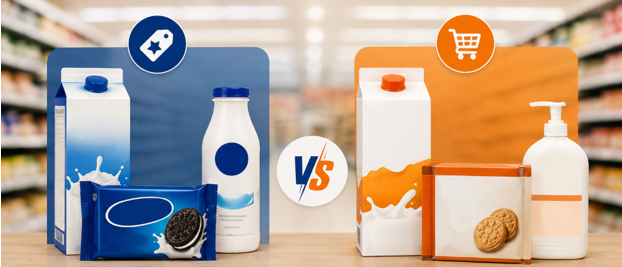
Walking through a grocery store often means making the same decision repeatedly: should you choose a well-known national brand or a lower-priced store brand? For many Canadian shoppers, this question has become even more important as grocery prices continue to fluctuate. While national brands are familiar and widely advertised, store brands have steadily improved in quality and now offer strong value across many product categories.
Instead of assuming one option is always better, smart shoppers compare products before making a purchase. Weekly grocery flyers make this process much easier by showcasing current promotions on both branded and private-label products. Many families review the No Frills Flyer to see which products are discounted that week and compare those offers with the Food Basics Flyer to determine where they’ll receive the best overall value.
What Is the Difference Between Store Brands and National Brands?
National brands are products manufactured and marketed by well-known companies that are sold across multiple retailers. Store brands, often called private-label products, are developed specifically for a particular grocery chain.
You’ll find both options in almost every grocery category, including:
- Dairy products
- Breakfast cereals
- Pasta and rice
- Frozen vegetables
- Snacks
- Household cleaning products
While the packaging and branding may differ, many store-brand products are produced to meet quality standards that satisfy everyday shopping needs.
Price Isn’t the Only Factor
Many shoppers immediately compare price tags, but true value involves more than spending less. Before choosing a product, consider how it performs in everyday use.
Ask yourself:
- Does the product meet your household’s quality expectations?
- Will the package size suit your family’s needs?
- Are the ingredients similar to the national brand?
- Is the lower price worth trying something new?
Thinking beyond the shelf price helps shoppers make decisions that balance affordability with quality.
When Store Brands Offer Excellent Value
Store brands have become increasingly popular because they often provide reliable quality at a competitive price. For products that are used regularly, choosing a private-label alternative can lower grocery expenses without noticeably changing your meals.
Common examples include:
- Flour and sugar
- Cooking oil
- Canned vegetables
- Frozen fruit
- Pasta
- Paper products
These are everyday essentials where many shoppers find little difference between store brands and national brands.
Reviewing the No Frills Flyer each week can help you identify promotions on these products and decide whether it’s the right time to restock your pantry.
When National Brands May Be Worth the Extra Cost
There are situations where paying a little more may make sense. Some shoppers prefer national brands because of a specific flavour, recipe, texture, or nutritional profile. Others have favourite products they’ve trusted for years.
Instead of buying every national brand automatically, choose them selectively for products where quality or personal preference makes a noticeable difference.
This balanced approach allows you to enjoy your favourite items while still controlling overall grocery spending.
Compare Promotions Before Choosing
One advantage of weekly grocery flyers is that they place both store-brand and national-brand promotions side by side. Rather than deciding based on habit, shoppers can compare available offers before visiting the store.
The Food Basics Flyer may feature discounts on selected national brands one week, while the No Frills Flyer highlights competitive prices on store-brand alternatives or pantry staples. Looking at both flyers gives shoppers the flexibility to choose whichever option delivers better value at that moment. This comparison takes only a few minutes but can make weekly shopping decisions much easier.
Try New Products One at a Time
Switching entirely to unfamiliar products can feel risky. A more practical approach is to replace one or two items during each shopping trip. For example, you might try a store-brand pasta, canned tomatoes, or breakfast cereal while continuing to purchase your preferred national-brand coffee or yogurt. Over time, you’ll discover which alternatives meet your expectations and where paying extra isn’t necessary.
Gradually testing products reduces risk and helps you build confidence in your purchasing decisions.
Value Looks Different for Every Household
There isn’t a single answer to the question of whether store brands or national brands are better. Families with children, students, seniors, and individuals living alone all have different shopping priorities. Some households focus on reducing grocery costs, while others place greater importance on taste, dietary requirements, or convenience. The best choice is the one that fits both your budget and your lifestyle.
Using weekly flyers allows shoppers to evaluate current promotions instead of relying on assumptions or old shopping habits.
Conclusion
Choosing between store brands and national brands doesn’t have to be an either-or decision. By comparing quality, ingredients, package sizes, and weekly promotions, shoppers can decide which products provide the best value for their household.
The No Frills Flyer makes it easy to discover promotions on everyday grocery essentials, while the Food Basics Flyer offers another valuable source for comparing branded and private-label products. Reviewing both before shopping helps Canadians make informed decisions, enjoy quality groceries, and get the most value from every grocery trip.
