
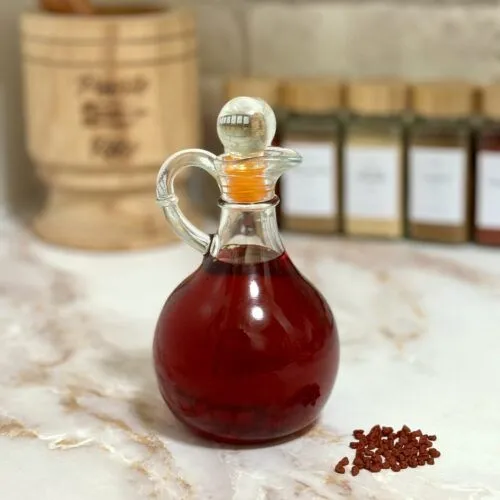
Annatto Food Color is a real plant dye used to give foods bright yellow, orange, and reddish shades. It comes straight from tiny plant seeds. Makers love its warm, cozy look on the shelf. But picking one for a product takes real care. You cannot just pick a nice color and go. Your final food outcome depends on heat levels, overall mix, dye type, and how you process it all.
Understanding the Annatto Source
Annatto is derived from the seeds of a plant, Bixa orellana, which is naturally cultivated in tropical areas. The natural pigments are found in the outer coating of these seeds and give them their characteristic color.
The main coloured compounds are carotenoids, among which are Bixin and Norbixin. The unique properties of annatto can be applied in different food systems that have different needs for the formulation. Depending on the application and processing, manufacturers may find themselves with several types of annatto.
Pigment source information provides clues to the pigment developer as to which ingredient can be used in a specific formulation for its technical requirements.
Key Color Properties
The warm color range, one of the main benefits of annatto, is what makes this herb so popular. It can offer yellow, golden shades or a deeper orange yellow, depending on the particular preparation and its concentration.
The final appearance will be dependent on the food matrix, dosage, processing conditions, and other ingredients in a formulation. Manufacturers should therefore check the color of the product itself and not just from a concentrated sample.
This is a more accurate way of assessing the color that can be created during the production process.
Common Food Applications
Annatto can be used in a variety of foods that demand yellow, golden or orange color. It is used in the manufacture of dairy products, cheese, bakery products, snacks, sauces and dressings and other processed foods.
Different products may require different methods of preparation of annatto. If there is considerable water in the system, then the formulation might need to be different than a fat-based or dry formulation.
Therefore, the application requirements should be worked out first, and then the most suitable form of annatto should be selected for use by the product developers.
Formulation Factors to Consider
Manufacturers need to consider many factors that can affect color performance when choosing annatto. These may be pH, temperature, light exposure, oxidation, fat content and processing time.
The color system also must be evenly distributed in the food matrix. If the dispersion is poorly carried out, the drug may not appear in the body in the same amount, or the dose needs to be increased just for that.
The test should be conducted as closely as possible to the commercial production conditions. It allows the development team to better appreciate the color properties in the mix during heat, storage and other color-relevant processing points.
Choosing the Right Ingredient Format
Various types of annatto preparation may be more appropriate to various manufacturing systems. Manufacturers need to consider if the ingredient comes in a powder, liquid formulation, extract or other particular format.
The handling and storage needs should also be taken into account. Powder products may need moisture protection, and liquid products may have other storage and handling requirements.
Therefore, a proper Annatto Extract needs to be tested in terms of its intended use, technical properties, concentration and application recommendation.
Evaluating Supplier Information
Technical documentation is a key ingredient of ingredient selection. Manufacturers need to consider specifications, recommended uses, storage guidelines, shelf life and other quality documentation when approving an ingredient.
It is also beneficial to have a discussion with the supplier regarding the applications. Technical advice is needed to decide on the suitability of the annatto preparation for the desired shade and processing environment.
Sample trials should be an important part of the selection process, especially if incorporating annatto for the first time in a new formulation.
Conclusion
Annatto food color provides a helpful natural solution for manufacturers to use in producing a variety of warm yellow, golden and orange hues for various food products. The choice, however, is dependent on the food matrix, the nature of the pigment, the processing conditions, the format of the ingredients and the final appearance desired. Before going into commercial production, appropriate testing can be used to confirm suitability. FoodRGB.com manufacturers looking into natural coloring options such as annatto can view the options available on the website and talk to a partner they think would be a good fit for their formulation needs.
